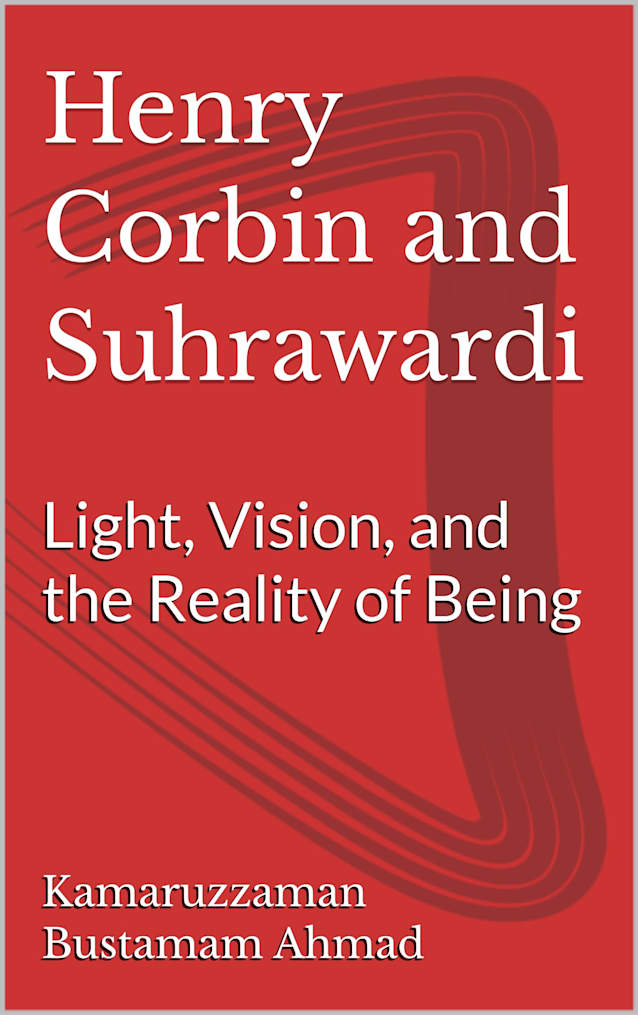
Henry Corbin and Suhrawardi: Light, Vision, and the Reality of Being (Henry Corbin Studies Book 9)
About
In an age dominated by abstraction, representation, and technological mediation, the question of what it means to be has become increasingly distant from lived experience. Reality appears everywhere—yet is rarely encountered. This book offers a profound philosophical response to that crisis.
Henry Corbin and Suhrawardi: Light, Vision, and the Reality of Being reopens one of the most powerful yet overlooked traditions in global philosophy: the ontology of light. Drawing from the illuminationist philosophy of Suhrawardi and the visionary reinterpretation of Henry Corbin, this work presents a radical rethinking of reality—not as substance, but as presence, gradation, and self-disclosure.
At its core, this book argues that being is not something hidden behind appearances. It is revealed through them. Reality unfolds as degrees of light, and the human being is not merely a thinker, but a participant in a luminous field of existence. What has been lost in modern philosophy is not truth, but vision—the capacity to encounter reality directly.
Through a rigorous yet deeply reflective approach, this book explores:
- The collapse of modern metaphysics and the crisis of perception
- The philosophy of light as developed by Suhrawardi
- Reality as gradation, intensity, and presence
- The role of imagination as an organ of reality, not illusion
- The rediscovery of the imaginal world (mundus imaginalis)
- Knowledge as vision, not representation
- The transformation of philosophy into a mode of seeing
This is not simply a study of Islamic philosophy. It is a philosophical intervention—offering an alternative to dominant Western frameworks and proposing a new paradigm for understanding existence in the 21st century.
Written for scholars, philosophers, and readers seeking depth beyond conventional thought, this book bridges metaphysics, epistemology, and spiritual philosophy in a way that is both intellectually rigorous and existentially transformative.
If you are searching for a philosophy that does not merely explain reality—but allows you to see it—this book is your entry point.