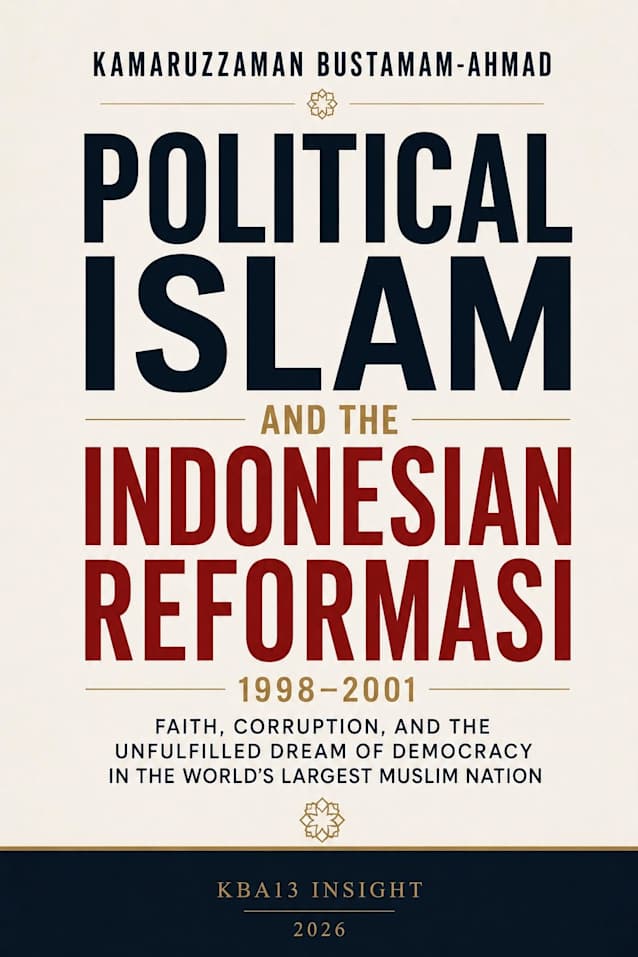
itical Islam and the Indonesian Reformasi: Faith, Corruption, and the Unfulfilled Dream of Democracy in the World’s Largest Muslim Nation (Southeast Asian Studies Book 6)
About
For millions of Indonesians, the fall of Suharto in 1998 promised the birth of a new democratic era. Yet more than a quarter of a century later, many of the same questions remain unanswered: Why did reform fail to dismantle oligarchic power? Why does corruption continue to shape public life? And what role did political Islam play in the struggle to redefine the world’s largest Muslim nation?
In Political Islam and the Indonesian Reformasi, Kamaruzzaman Bustamam-Ahmad revisits one of the most decisive periods in modern Southeast Asian history through a rare combination of political sociology, Islamic studies, and historical analysis. Drawing upon decades of research and reflection, this book traces the responses of Muslim intellectuals, Islamic organizations, political parties, and religious movements to the collapse of the New Order regime and the uncertain birth of Indonesian democracy.
Far from presenting Political Islam as a single movement, the book reveals a complex landscape of competing visions, ideological debates, and struggles over identity, authority, and national direction. From the rise of Islamic political parties and the presidency of Abdurrahman Wahid to the persistence of oligarchy and the unfinished promises of Reformasi, the story that emerges is one of hope, contradiction, and unfinished transformation.
This expanded and updated edition carries the discussion beyond 2001 and connects the aspirations of Reformasi to the realities of Indonesia in 2026—an era marked by democratic fatigue, elite consolidation, and renewed debates about religion and power in public life.
Essential reading for scholars, students, policymakers, and anyone seeking to understand Political Islam, Indonesian democracy, Southeast Asian politics, and the future of Muslim societies in the twenty-first century.
What if the greatest challenge facing Indonesian democracy is not the conflict between Islam and democracy, but the failure to fulfill the promises made when democracy finally arrived?