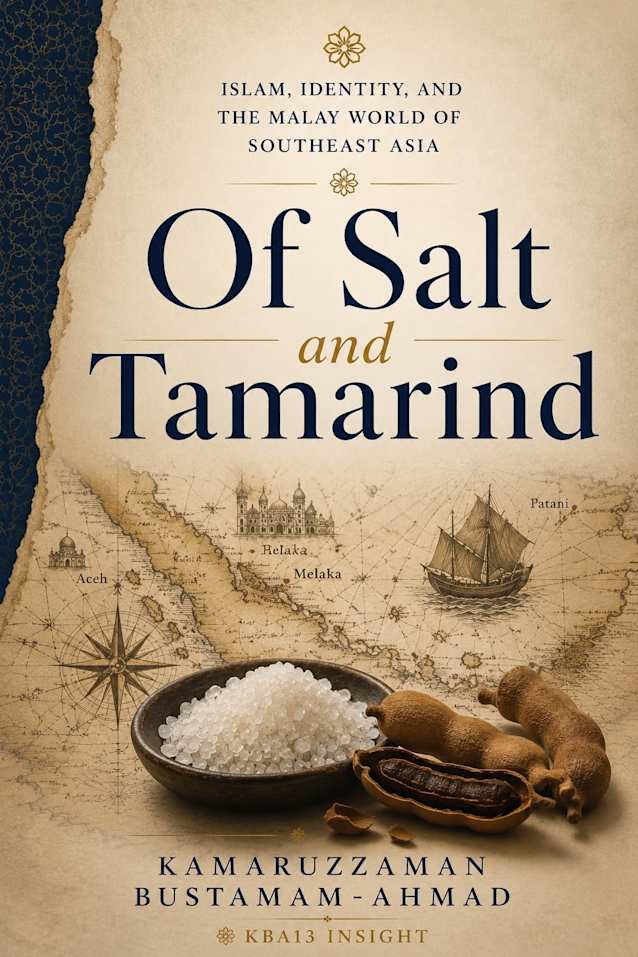
Of Salt and Tamarind: Islam, Identity, and the Malay World of Southeast Asia (Southeast Asian Studies Book 5)
About
What does it mean to belong to the Malay world in the twenty-first century?
From the shores of Aceh to the cultural landscapes of Melaka and the historical memory of Patani, Of Salt and Tamarind explores the long and complex relationship between Islam, identity, and the making of the Malay world in Southeast Asia.
Moving beyond narrow national boundaries, this book traces how trade, migration, religious scholarship, political authority, and cultural exchange shaped a civilizational space that connected communities across the Indian Ocean and the South China Sea for centuries. Salt and tamarind—two ordinary yet enduring ingredients of everyday life—become powerful metaphors for memory, mobility, and the shared experiences that continue to bind the Malay world together.
Combining history, anthropology, religious studies, and political analysis, Kamaruzzaman Bustamam-Ahmad examines the transformations of Malay Muslim identity in the age of nation-states, globalization, digital communication, and artificial intelligence. The book offers a fresh perspective on how Islam in Southeast Asia has continuously negotiated tradition and modernity, locality and cosmopolitanism, faith and citizenship.
This is an essential volume for readers interested in Islam in Southeast Asia, the Malay world, Muslim identity, Islamic civilization, Aceh studies, Patani studies, Malay history, anthropology of religion, and contemporary debates on culture and belonging in the region.
Rich in historical insight and contemporary relevance, Of Salt and Tamarind invites readers to rethink Southeast Asia not merely as a collection of nation-states, but as an interconnected civilizational world whose intellectual and spiritual legacy continues to shape the future of the region.