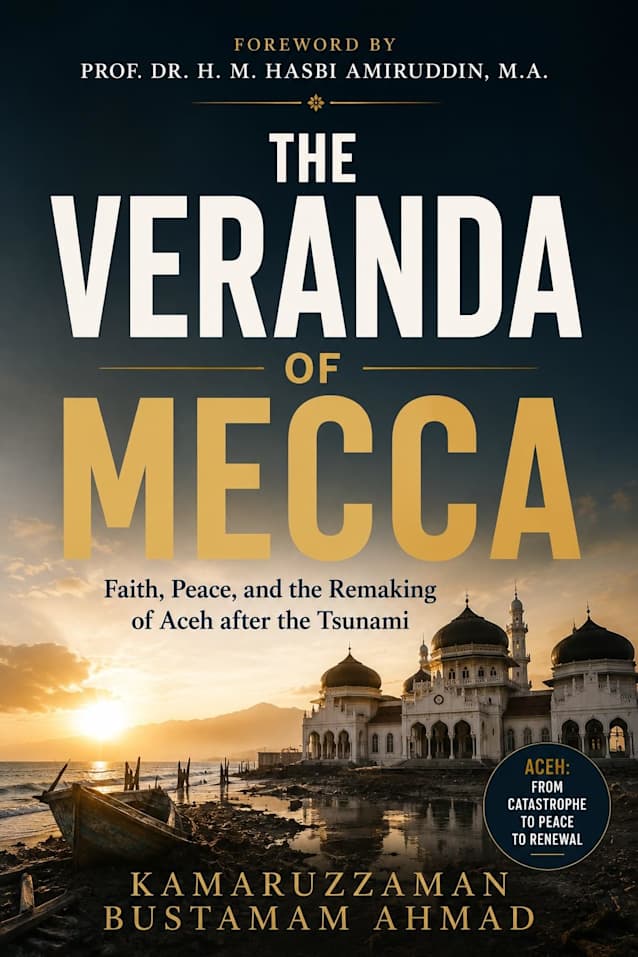
The Veranda of Mecca : Faith, Peace, and the Remaking of Aceh after the Tsunami (Southeast Asian Studies Book 7)
About
The Veranda of Mecca offers a rare and deeply grounded portrait of Aceh after two defining ruptures: the 2004 Indian Ocean tsunami and the 2005 Helsinki peace agreement that ended decades of armed conflict between the Indonesian state and the Free Aceh Movement.
Written by Acehnese scholar Kamaruzzaman Bustamam-Ahmad, this book examines how faith, memory, violence, humanitarian reconstruction, Islamic law, political transition, and local identity reshaped one of Southeast Asia’s most distinctive Muslim societies. Aceh has long been known as Serambi Mekkah—the Veranda of Mecca—but this volume asks what that title means after catastrophe, war, foreign aid, post-conflict politics, and the struggle to rebuild public life.
Across seven thematic parts, the book explores Acehnese culture, tradition, Islamic sharia, post-tsunami reconstruction, poverty, political authority, GAM, Wali Nanggroe, local activism, humanitarian aid, nationalism, and Aceh’s relationship with the wider Malay and Southeast Asian world. Blending anthropology, political reflection, Islamic studies, and personal observation, the author reads Aceh not as a distant periphery but as a powerful case study in how societies remake themselves after disaster and conflict.
This book is ideal for readers interested in Aceh, Indonesia, Southeast Asian Islam, post-conflict governance, disaster recovery, peacebuilding, Islamic law, anthropology, humanitarian intervention, and the politics of identity in the Muslim world.
For scholars, students, policy analysts, and serious readers of modern Southeast Asia, The Veranda of Mecca is both an intellectual map of post-tsunami Aceh and a meditation on faith, memory, power, and the unfinished work of peace.